In short: For makers selling repeatable things, prints, ceramics, jewellery, candles, clothing, Instagram ads can work well. The work photographs beautifully and nobody was searching for it anyway. For artists selling one-off originals or commissions at high prices to a handful of buyers a year, paid ads are usually the wrong instrument, and galleries, relationships and direct approaches will beat them. The dividing line is not how good your work is. It is whether you have something to sell repeatedly, at a price with room in it.
The question underneath the question
Artists ask whether ads work. What decides the answer is a duller question: can you sell the same thing more than once?
Advertising is a machine for finding people at volume. It is very good at that, and comparatively expensive to run. To justify it you need something you can sell to the fiftieth person as easily as the first.
Can you sell the same thing more than once?
Yes
Editions, multiples, products. Prints, ceramics, jewellery, textiles, small runs.
Ads have something to work with. Every new customer can buy the same item.
No
Originals and commissions. One piece, one buyer, then it is gone.
Ads bring you a hundred admirers for every possible purchaser, and you pay for all hundred.
Where makers have a genuine advantage
If you are in the first group, you start ahead of most advertisers.
Nobody is searching for your work, which is exactly the argument for Instagram. Nobody types "handmade stoneware mug" into a search bar. There is no queue of existing demand to capture, so it has to be created, and creating want from an image is precisely what the feed does.
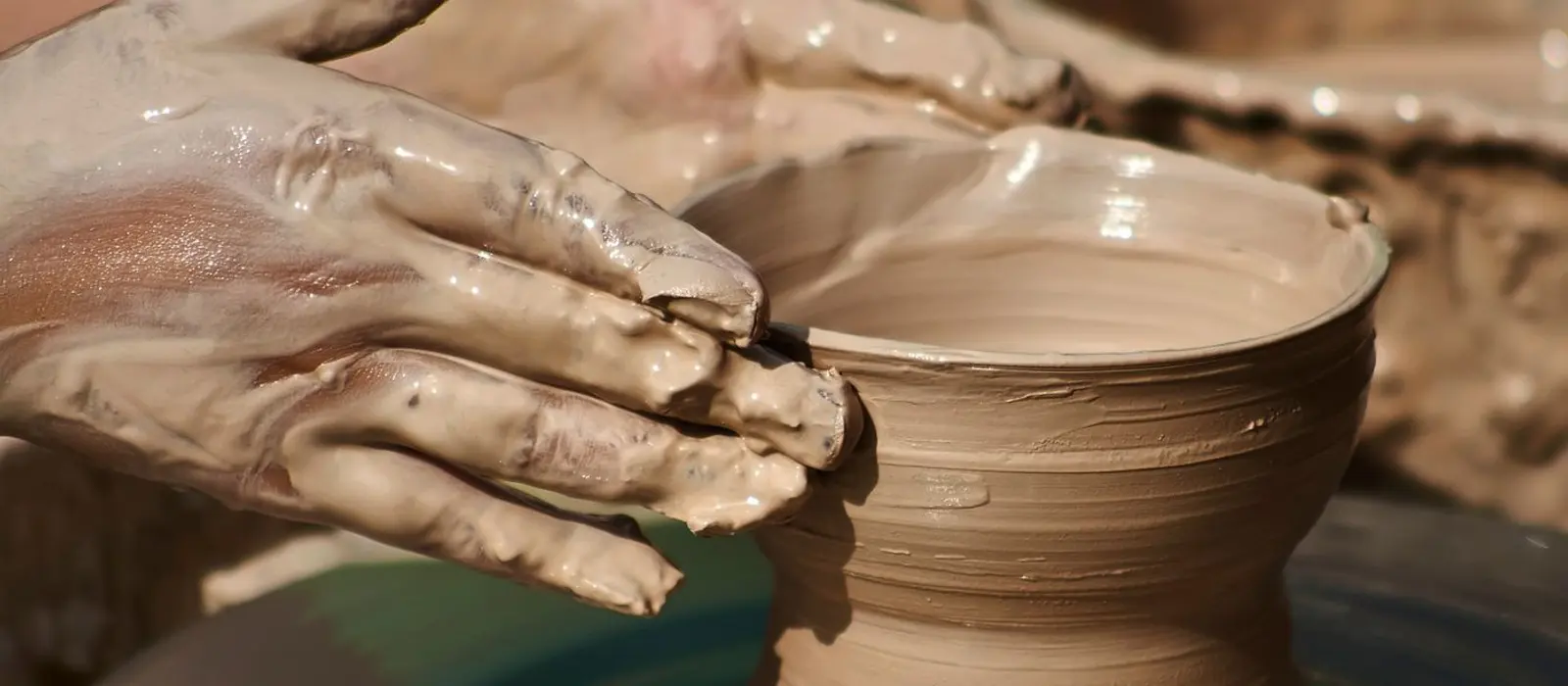
You already have the hard part. The most common cause of a failed campaign is creative nobody wants to look at. Your raw material is objects that photograph well, hands doing skilled work, and processes people find quietly hypnotic. Most businesses running ads would pay a lot for footage you can shoot on a phone in your own studio.
You are the differentiator. Video of the person who actually makes the thing consistently outperforms polished production for small brands. It is the one asset a competitor cannot copy, and it does not look like an advert, which buys you the opening second before anyone decides they are watching one.
The honest arithmetic
Work out what you keep on a sale after materials, your time, packaging, postage and the platform's cut. That number is your ceiling for what you can pay to win a customer.
This is where handmade work gets difficult, and it should be said plainly. A lovingly made object with real materials cost, sold at a fair price, often has a thin margin. If you keep $18 on a sale, there is not much room to buy a buyer.
Two things widen that room.
- Repeat purchase. Candles, ceramics, prints and jewellery all get rebought and gifted. If a customer comes back twice more, you can afford considerably more to meet them the first time. Most makers undercount this and conclude too early that ads do not work for them.
- Price. A $180 piece has room a $28 piece does not. If everything you sell is small and cheap, ads are a harder case regardless of how good the work is.
A note on what people actually search
Worth knowing, since it shapes what you will find when you research this. The phrase "ads for artists" is searched mostly by tattoo artists, musicians and makeup artists, whose businesses look quite different from a ceramicist's. Advice written under that heading may not have been written for you. Weigh anything you find against your own margin rather than someone else's.
If you sell one-off work
This is not a failure of your work or a lack of ambition. Paid advertising is simply the wrong tool for a business that needs six buyers a year rather than six hundred.
What tends to work better:
- Galleries, stockists and markets, where buyers arrive already intending to buy art.
- Relationships and repeat collectors. Someone who bought once is the most likely person to buy again, and reaching them costs nothing.
- An email list. Unglamorous, and still the most reliable way to sell an edition in an afternoon.
- Being findable when someone goes looking for you specifically, by name, after seeing your work somewhere. That is a search problem, not an ads one.
That last one is worth taking seriously, because it is the gap most artists actually have. Your work is seen, someone tries to find it later, and cannot.
If you want to test it anyway
Sensible, if the arithmetic leaves any room.
- Pick your most repeatable product, not your best piece.
- Send ads to that product's page, never to your homepage or your Instagram profile.
- Make several different pieces of creative: the object, the making, you talking, something unexpected.
- Set a budget you can sustain for a few weeks, and leave it alone long enough to mean something.
- Judge it on what a sale cost you against what you keep. Not on likes, reach or followers gained.
A test that comes back negative is still worth having. It tells you the money belongs somewhere else, and that is a cheap answer to a question that would otherwise nag for a year.
Related: whether ads suit a small business at all, and how to build the campaign step by step.
If you would like someone to work the numbers through with you first, that is where I start with Meta ads for Melbourne makers.